Connect with a Mölnlycke representative to explore the evidence and how our products could impact your facility.
Competing dressings make familiar promises. Mepilex® Border backs its performance with documented bench testing, published data, and clinical outcomes you can examine for yourself. Standardize on proof and there's nothing left to uncover.
Mepilex® Border is a family of dressings purpose-shaped for different sites and wound types, standing on a single foundation of documented performance. From head to heel, Mölnlycke covers the wounds you treat and the pressure injuries you prevent, each product built on Safetac® technology, which minimizes pain, trauma and risk of maceration during removal.1 Whether the goal is treatment or prevention, the record is the same.
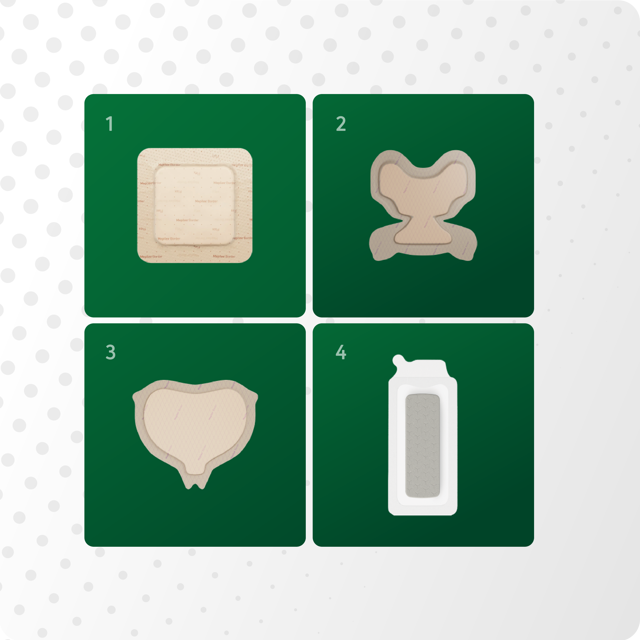
Flex technology that conforms to difficult anatomy across a wide range of exuding wounds.2
Butterfly-shaped with Deep Defense® technology for the strength and flex the heel demands.3
Shaped for the sacrum with Deep Defense® technology built for pressure injury prevention.4
Incision care with sustained antimicrobial silver, conforming to difficult surgical sites.5
Behind Mepilex® Border are 192 pieces of evidence,6 ranked by strength from laboratory testing to controlled clinical studies. The Record goes deeper, with the comparative performance data, published clinical outcomes, and utilization and cost evidence a value analysis requires, all in one place.
Connect with a Mölnlycke representative to explore the evidence and how our products could impact your facility.
The strongest findings sit at the top of the pyramid, in randomized trials and clinical studies that measure what happens at the bedside. These are the results that hold up when a value analysis asks for proof.
Clinical outcomes start with how a dressing behaves once it is on the patient. In laboratory testing against leading bordered foams, Mepilex® Border dressings held their structure, moved with the body, and kept moisture off the skin.
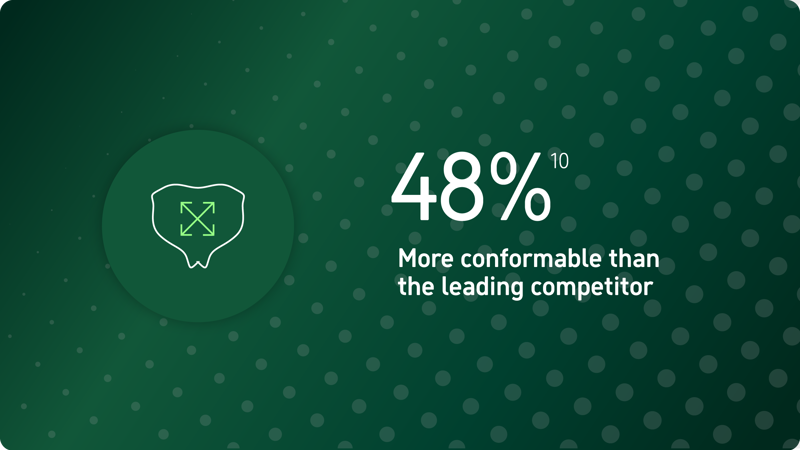
Edge lift is a key contributor to dressing failure. Mepilex® Border Flex moves with the body in every direction, keeping consistent contact so the edges stay down.
Moisture trapped under a dressing breaks down the skin. Mepilex® Border Flex balances absorption with continuous evaporation, keeping the microclimate in check.
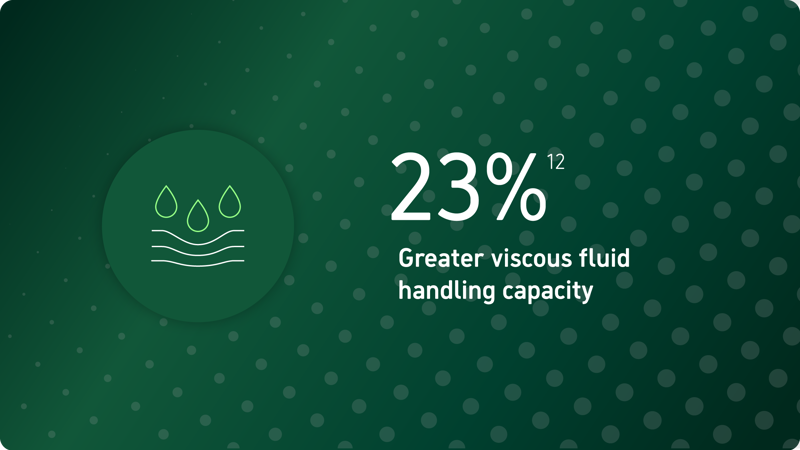
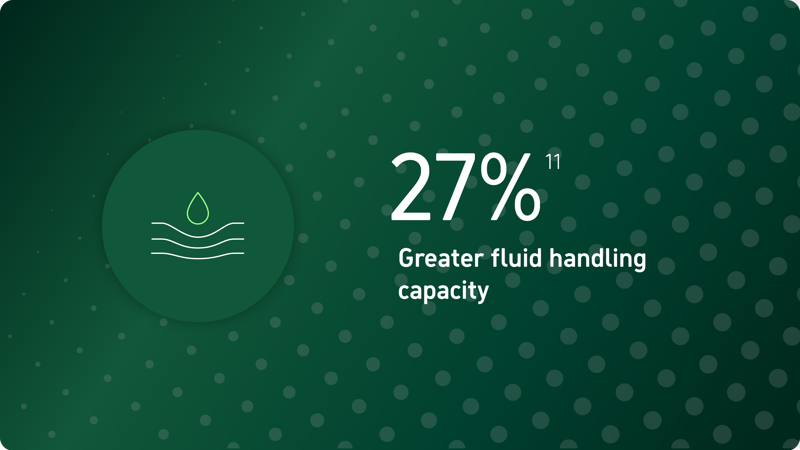
Thick exudate is harder to manage and easier to leave behind. Mepilex® Border Flex draws viscous fluid in and holds it, protecting the wound for the full wear time.
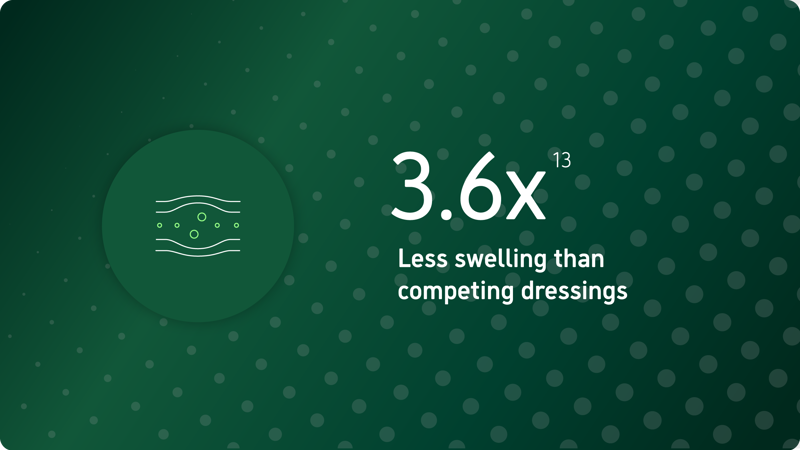
Swelling pushes a dressing out of position. Mepilex® Border Sacrum keeps a low profile after absorption, reducing the risk of detachment from friction and shear.
Unit price is only one line in the cost of a dressing. How often it is changed, how many get used, and how much nursing time each change takes can shift the economics of care.
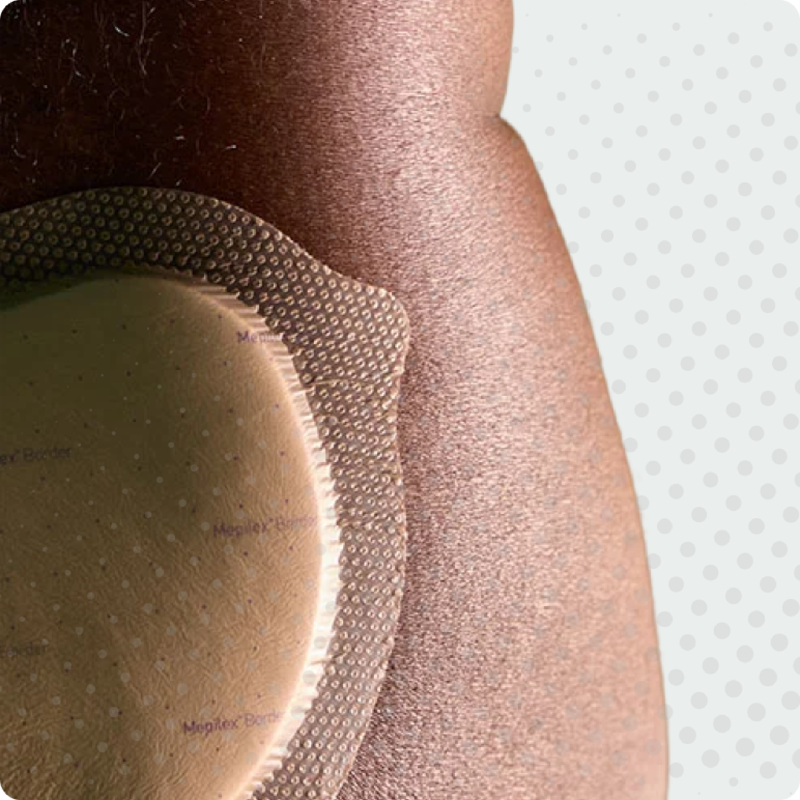
Mepilex® Border Sacrum and Heel handle up to 130% more fluid than other bordered foams, supporting a potentially longer wear time.14
In a randomized study, the competing arm recorded more adhesion failures and rolled edges, the failures that force an early change.7

A dot pattern on the backing tracks exudate spread, so nurses can assess the dressing without removing it or disturbing the wound.15
The whitepaper, the testing data, clinical tools, and the latest thinking on pressure injury prevention, gathered for every stage of an evaluation. Use them yourself or share them with your team.
Go deeper into the evidence, performance and economic story behind Mepilex® Border.
Download The CompendiumApproved head-to-head testing shows measurable differences in conformability, absorption, swelling and shear reduction — the characteristics that matter most in real use.
Performance can influence dressing changes, utilization and nursing time — all of which affect the total cost of care, not just the acquisition price.

With the invention of Safetac, Mölnlycke revolutionized wound care, introducing a range of groundbreaking dressings specifically designed to minimize pain at dressing change. Discover how Safetac technology can benefit you and your patients.
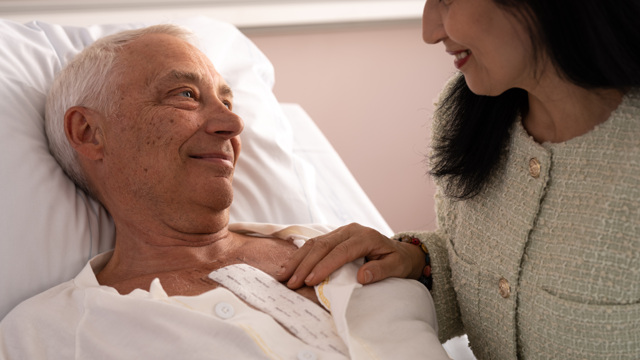
Successful surgical outcomes depend on appropriate post-operative care, undisturbed wound healing and correct choice of a post-op dressing. Surgical care does not end when the surgery ends. What can your post-operative dressing and dressing protocol do to help optimize healing?
Patients’ skin is one of the most overlooked sources of preventable infections. While nurses and infection prevention work tirelessly to reduce healthcare-associated infections and surgical site infections, evidence continues to show that most pathogens stem from a patient’s own microbiome, not the hospital environment.1 As more infections occur outside the ICU, whole-hospital skin integrity and decolonization strategies that incorporate CHG antiseptic skin cleansers are emerging as the most effective practices to reduce HAIs and SSIs across diverse patient populations.
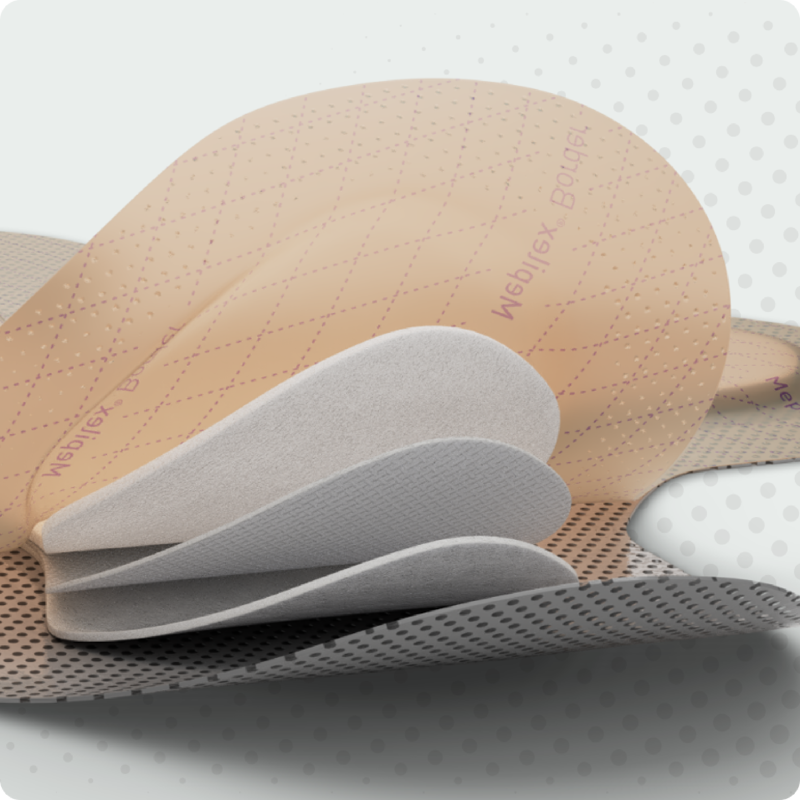
Every Mepilex® Border dressing is built on Safetac® technology1 and a multilayer construction that absorbs, channels, and retains exudate away from the skin.16 Behind the family are 192 pieces of published evidence,6 from laboratory testing to controlled clinical studies.
Mepilex® Border Flex covers a wide range of exuding wounds across the body.2 Mepilex® Border Sacrum and Heel are shaped for the sites most at risk of pressure injury.3,4 Mepilex® Border Post-Op Ag adds antimicrobial silver for incision care.5 Your Mölnlycke representative can help match products to your protocol.
Yes. Mepilex® Border Sacrum and Heel are proven to help reduce the risk of pressure injuries in acute care when used as part of a comprehensive prevention protocol,17 and they can also manage existing wounds. Mepilex® Border Flex is indicated for exuding wounds, including pressure injuries.2
In head-to-head testing, Mepilex® Border Flex showed 23% greater viscous fluid handling capacity than the leading competitor,12 drawing thicker fluid in and holding it away from the wound.
Mepilex® Border dressings may be left in place for several days, depending on the condition of the wound and surrounding skin, or as indicated by clinical practice.18 Mepilex Border Post-Op Ag may be left in place for up to seven days.19
Wear time, early replacements, and nursing time all shape the cost of care. Use the calculator above to estimate the impact in your setting, or download The Record for the full utilization and economic evidence.
Better wound care takes more than what's in the box. Mölnlycke backs every product with the evidence, education, and support clinicians need to deliver connected care with confidence.

Purpose-built products designed for the real challenges of wound care, backed by evidence clinicians can trust.
Practical training, tools, and resources that build clinician confidence, from onboarding a new protocol to everyday practice.
Clear, easy-to-understand materials that help patients follow their care plan and stay engaged in their own healing.
Knowledgeable reps and clinical resources that help teams put best practices into place and keep them there.
1. Mölnlycke.com, Mepilex Border Flex product page. Candidate citations from Border Flex reference list: White, R.A. Wounds UK;4(1):14-22. Woo, K. & Bergström, C. Clinical Investigation Report MXB408, Part A, 2007. Meaume, S. et al. Ostomy Wound Management 2003;49(9).
2. Mölnlycke.com, Mepilex Border Flex product page (indications).
3. PD-553491 Rev 20, claim 43; Mölnlycke Border Heel product copy.
4. PD-553491 Rev 20, claim 42.
5. PD-583137 Rev 03, claims H, N.
6. Mepilex Border evidence pyramid one-pager.
7. PD-553491 Rev 20, claim 53.
8. PD-553491 Rev 20, claim 32 (ref 64).
9. Mölnlycke published product copy, Border Sacrum.
10. Border Flex vs. Complete Care testing summary (09/22/26); data on file PD-821009, PD-529747, PD-534569 or PD-534571.
11. Border Flex vs. Complete Care testing summary (09/22/26); data on file, as above.
12. Border Flex vs. Complete Care testing summary (09/22/26); data on file, as above.
13. PD-553491 Rev 20, claim 51 (ref 87).
14. PD-553491 Rev 20, claim 30 (ref 87).
15. PD-553491 Rev 20, claim 50 (refs 77, 78).
16. PD-553491 Rev 20, claim 40 (refs 71, 72).
17. PD-553491 Rev 20, claim 44 rationale (Kalowes 2016; Hahnel et al. 2019).
18. PD-553491 Rev 20, claim O.
19. PD-583137 Rev 03, claim J.